Buoyancy compensation and bail-out gas cylinder
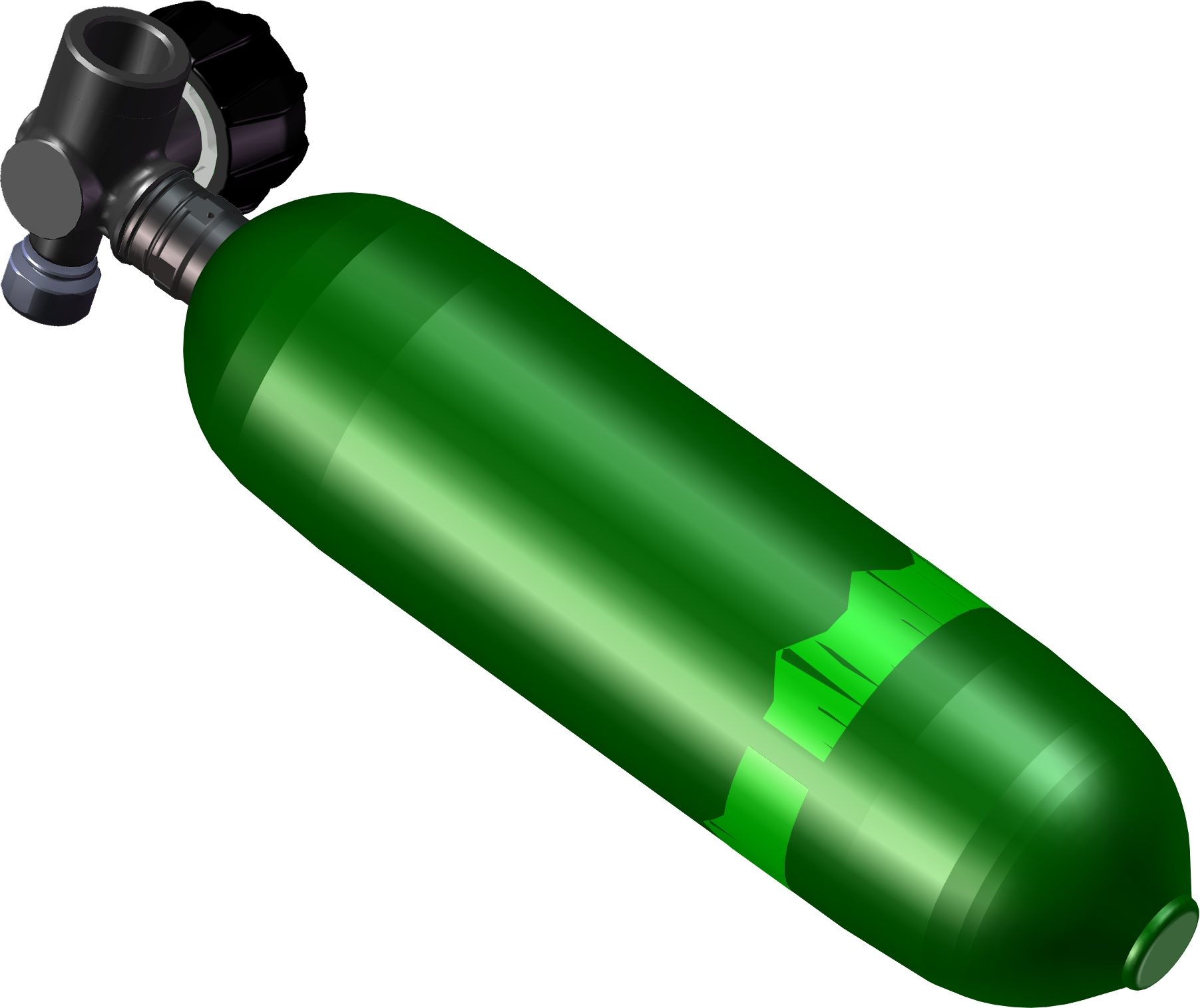
Gas cylinder for buoyancy or bail-out (with cylinder valve for left/right mounting).
1 High pressure connection |
3 Mini Pressure gauge |
2 Gas cylinder valve |
The buoyancy compensator is fitted with two 1 litre, 300 bar gas cylinders. The buoyancy gas cylinder is connected to the dry suit through the buoyancy regulator. This allows the diver to check his buoyancy. The bail-out gas cylinder acts as a redundant gas supply in an emergency situation when using the bail-out breathing valve on the full face mask.
Cylinders are made from composite material, that is carbon fibre reinforced plastic and have the same design as the gas supply cylinder, see section Gas supply, cylinder on page 24.
The cylinders' valves and end fittings are the only metallic parts of the construction which gives the cylinders their unusually low magnetic signature. The cylinder's unique composite construction permits movement in the earth's magnetic field without an induced magnetic field arising which can be detected by magnetic sensitive objects. The cylinder is equipped with a mini pressure gauge that indicates the gas pressure with increments of 50 bar.
The buoyancy gas cylinder is mounted on the diver's left side with the cylinder valve fitted to ensure that it is easily accessible to the diver.
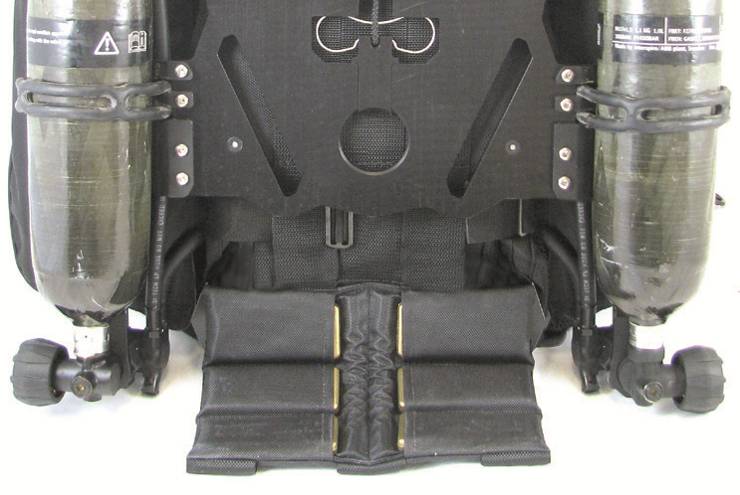
Buoyancy gas cylinder and bail-out gas cylinder fitted to the buoyancy compensator.
On buoyancy gas cylinder's threaded connection is connected to the buoyancy regulator that reduces the pressure of the gas that then passes through the suit hose to the dry suit and via the buoyancy gas hose to the inflator.